
MENU
AFTER JEAN MICHEL MOREAU THE YOUNGER, FROM SALOMON GESSNER'S LA MORT D’ABEL (1799)
Marble
83 x 56 cm
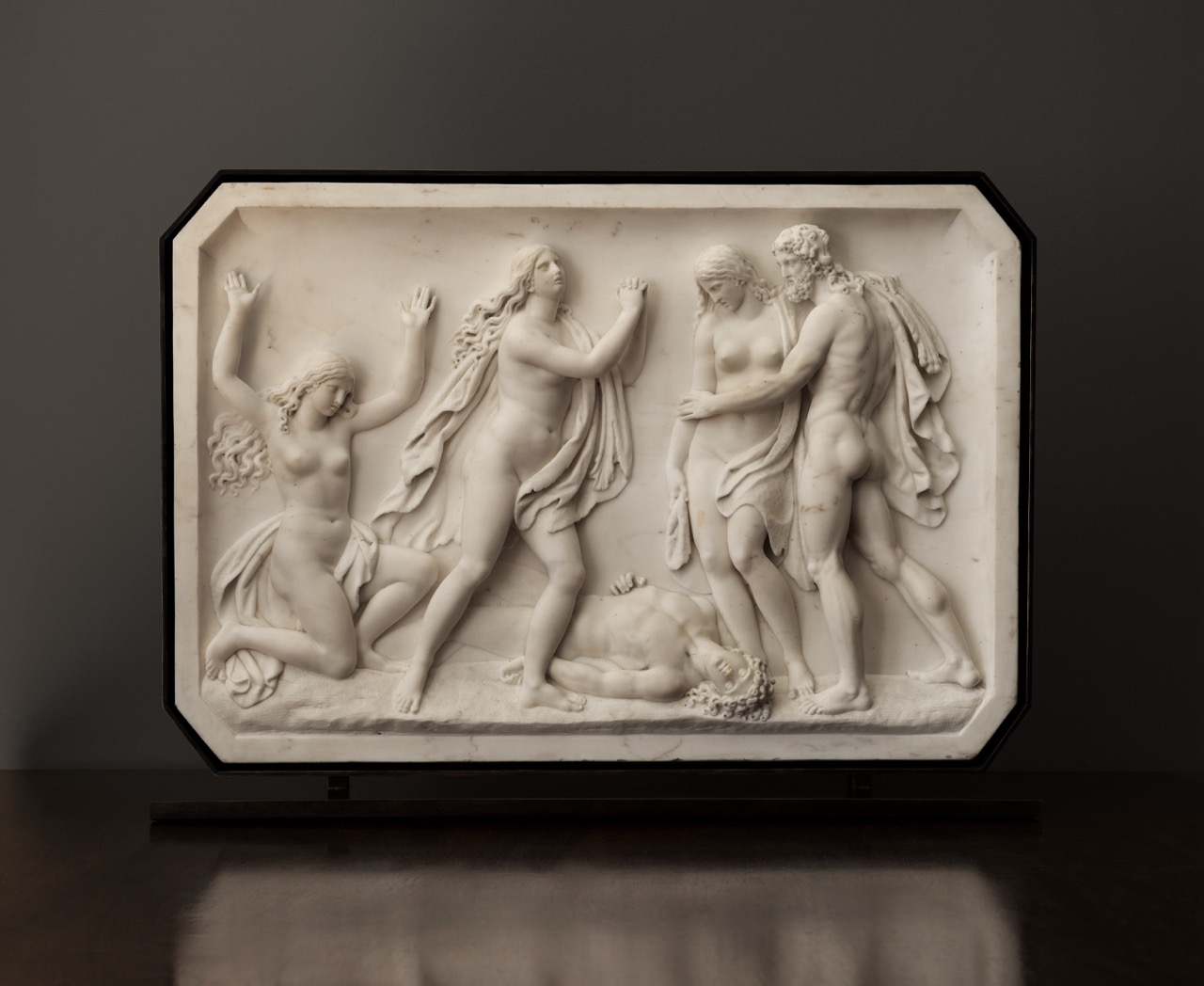
This marble relief depicting the highly unusual - and rare - subject of Adam and Eve Lamenting the Death of Abel is inescapably connected to Jean Michel Moreau the Younger’s engraving of the same subject that was published in the 1799 French edition of Salomon Gessner’s epic poem Der Tod Abels, written in 1758.
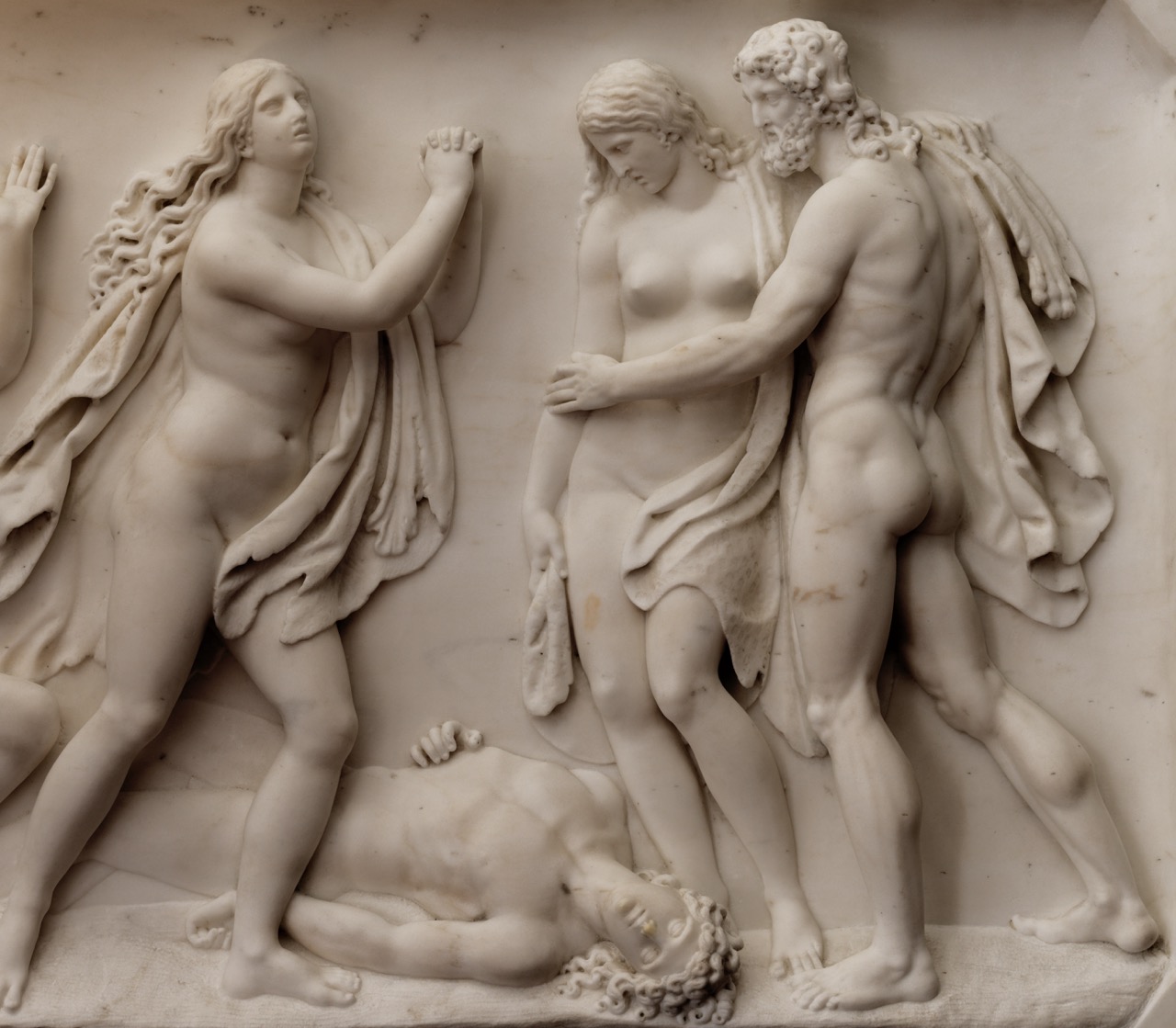
The composition faithfully adheres to Gessner’s original text, in which the lifeless Abel is found by his parents, Adam and Eve, and by his wife and sister-in-law, Thirza and Mehala respectively, two characters that are absent from the Biblical narrative but that play a key role in Gessner’s poem. The dramatic tension and pathos of the discovery of Abel’s body hinges on the dialogue between the two sisters, with page after page describing their physical distress and agony, to the point that “Adam felt his pain augmented by that of his daughters. In Moreau’s engraving - as in the present relief - this is reflected in the vivid manifestations of sorrow that characterise Thirza and Mehala, while their parents stand, in seemingly collected grief, to one side. Between them, the body of Abel lies recumbent in theatrical foreshortening, his youthful head staring blankly towards the viewer.
AFTER JEAN MICHEL MOREAU THE YOUNGER, FROM SALOMON GESSNER'S LA MORT D’ABEL (1799)
Marble
83 x 56 cm
This marble relief depicting the highly unusual - and rare - subject of Adam and Eve Lamenting the Death of Abel is inescapably connected to Jean Michel Moreau the Younger’s engraving of the same subject that was published in the 1799 French edition of Salomon Gessner’s epic poem Der Tod Abels, written in 1758.
The composition faithfully adheres to Gessner’s original text, in which the lifeless Abel is found by his parents, Adam and Eve, and by his wife and sister-in-law, Thirza and Mehala respectively, two characters that are absent from the Biblical narrative but that play a key role in Gessner’s poem. The dramatic tension and pathos of the discovery of Abel’s body hinges on the dialogue between the two sisters, with page after page describing their physical distress and agony, to the point that “Adam felt his pain augmented by that of his daughters. In Moreau’s engraving - as in the present relief - this is reflected in the vivid manifestations of sorrow that characterise Thirza and Mehala, while their parents stand, in seemingly collected grief, to one side. Between them, the body of Abel lies recumbent in theatrical foreshortening, his youthful head staring blankly towards the viewer.