
MENU
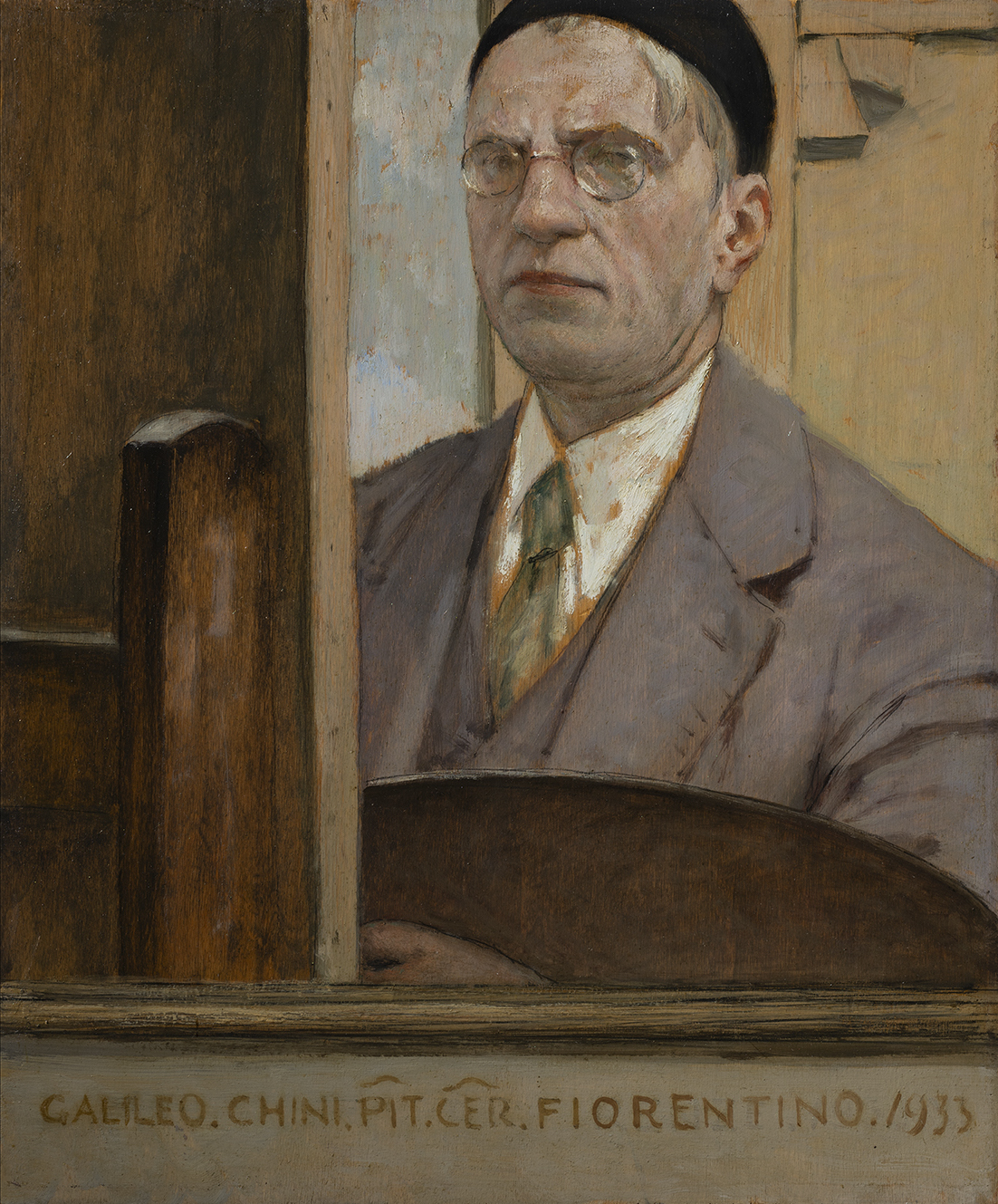
Oil on panel; signed at the bottom: “GALILEO.CHINI.PIT.CER FIORENTINO.1933”
60 × 50 cm
PROVENANCE
Finarte, Rome, 28-29 April 1987;
Farsetti, Prato, 10 October 1997;
Private collection, Rome;
Capitolium, Brescia;
Private collection, London.
Galileo Chini was a versatile and multifaceted artist, counted among the pioneers of Art Nouveau (Liberty) in Italy during the late 19th and early 20th centuries.With great passion, he devoted himself to painting, fresco and architecture and also to the art of ceramics, creating a diverse and highly unique body of work and he played a key role in refining the taste of the Art Deco style that developed in the following decades
In this self-portrait Chini moves away from the decorative influence of the Secessionist style that marked the early decades of the 20th century, reaching its highest expressions between Art Nouveau and Art Deco, and reveals a solid structuring of forms and a tangible clarity in spatial composition that is typical of Italian early 20th century art. For approximately a decade starting in the late 1920s, Chini’s painting is characterized by a more intimate dimension, distilled with subdued poetic lyricism.
Following his successes at the Venice Biennales and prestigious commissions in Italy and abroad – including the remarkable Throne Room in the Royal Palace of Bangkok, personally commissioned by the King of Siam – Chini prefers easel painting and focuses on introspective psychological elements. This is evident in the concentrated intensity of the present self-portrait. The signature and inscription on the parapet, in which the artist refers to himself as a ‘painter and ceramist’, is also a proud reference to the artistic tradition of the Florentine Renaissance.